


Thanks for Gonzalo Ansótegui’s 41 years at Burgos Customs
The former Technical Managing Director of the Burgos Transport Centre will receive the Plaque of Honour on Friday from the Spanish Confederation of Freight Transport in recognition of his professional career.
Source: Diario de Burgos
Gonzalo Ansótegui Urrestarazu, a native of Burgos, answers a call from Diario de Burgos while peacefully walking the Northern Way of the Camino de Santiago, specifically in Santillana del Mar. He has been enjoying life, family, and his favourite hobbies since last September, when he retired from his position as Managing Director of the Burgos Customs Transport Centre (CTBurgos), after 41 years of service in Villafría.
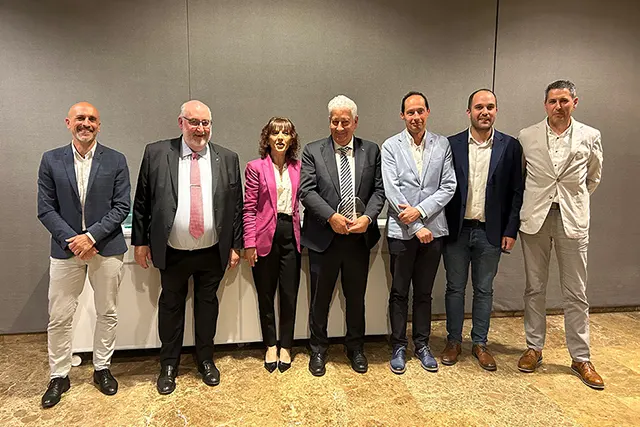
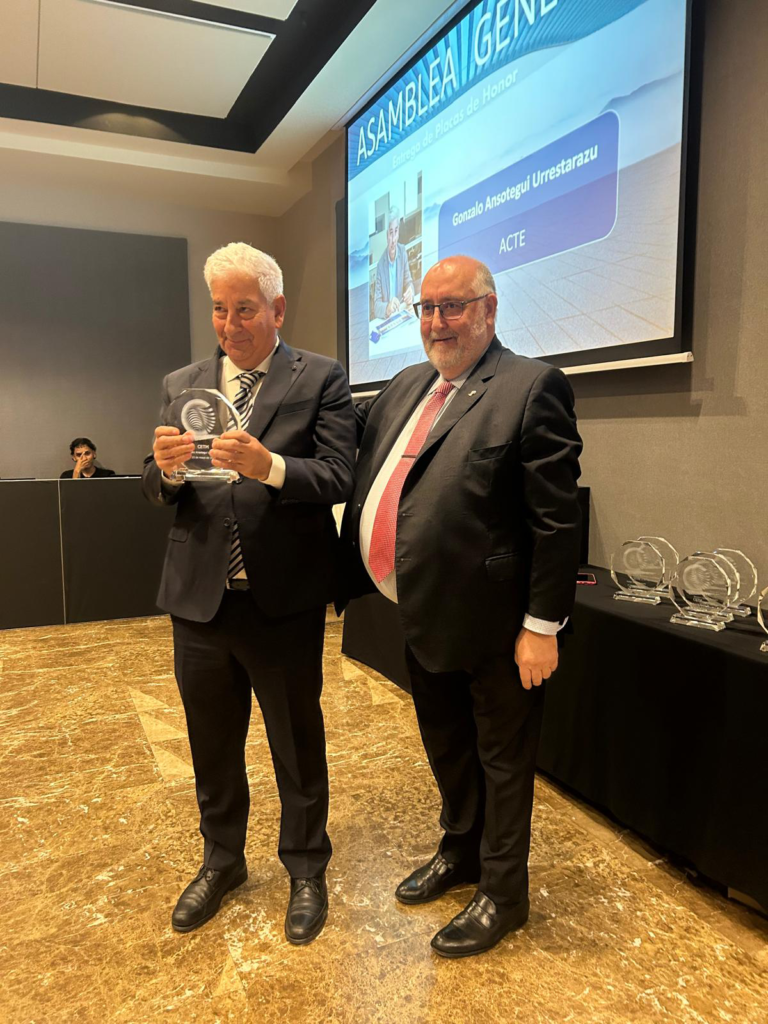
His retirement plans have been happily interrupted by a well-deserved tribute, promoted by the Association of Transport and Logistics Centres of Spain (ACTE), which has proposed him for the Plaque of Honour from the Spanish Confederation of Freight Transport (CETM), in recognition of his work at CTBurgos and his contribution to the promotion and development of transport and logistics centres. The award ceremony will take place this Friday, the 23rd, in Madrid, during CETM’s General Assembly.
It marks the end of a professional career that began at the age of 22, on January 1st, 1983, at the dawn of what would become one of the most important inland customs hubs in Spain.
Specifically, Ansótegui was hired as a senior administrative officer at the Sociedad de Servicios Complementarios de la Estación Aduanera de Burgos (Seabsa), a company formed in the early 1980s by the City Council, the Provincial Council, and local savings banks — the seed of what is now CTBurgos.
Just three years later, at only 25 years old, he was provisionally appointed Technical Managing Director, a position he held for nearly four decades of tireless work and dedication to the logistical future of Burgos.
Today, CTBurgos offers more services than the Customs office itself, which experienced its golden era until January 1st, 1993, when the European Single Market came into effect and physical borders between EU member states disappeared.
“We must fight for the logistical development of Burgos — it is an exceptional hub,” he insists.
Ansótegui has been an effective manager of all the projects that have shaped Villafría over the years — including logistics warehouses, the parking area, the Customs Building, and the Dry Port — turning it into one of the main logistics hubs in northern Spain. “When I started, there were no transport centres and logistics wasn’t what it is today,” he recalls.
He worked closely with Antonio Medrano, owner of Interbon and president of the Chamber of Commerce, who spearheaded the idea of creating a Customs facility next to the railway, the airport, and the N-1 highway to ease the burden on the Irún customs office. “We were born with an intermodal vocation,” he stresses.
The same collaborative spirit existed with José María Yartu and Antonio Méndez Pozo, another Chamber president who pushed for an ambitious leap forward in the 2000s with the creation of the Dry Port and the expansion of the facilities.
He has advised every mayor, starting with José María Peña San Martín, as well as all the entrepreneurs who passed through the centre. Since those early days in the 1980s, he became a tireless promoter of Burgos’ industrial strengths — always with a warm smile, impeccable kindness, and his characteristic eagerness for conversation.
Milestones. Ansótegui feels fortunate to have lived through the history of the Customs Centre from its inception — a key chapter in the industrial development of Burgos. Among the highlights of his career, he recalls the arrival of Dragados y Construcciones, who were building the gas pipeline that would bring city gas to Burgos and its industries. For him, it was like winning the lottery, as it meant renting out warehouses and offices to accommodate the project.
Another memorable moment was when Campofrío set up operations in the transport centre, building a warehouse to outsource the logistics of its Burgos factories. The meat company was the first of many — later followed by L’Oréal, Frías Alimentación, Matutano, Angulas Aguinaga, Langus SeaFood, among many others.
In 2006, the Dry Port was launched — the first in Castilla y León. It began to flourish with the arrival and departure of freight trains to and from the seaports of Barcelona and Valencia (key gateways for Asian goods), and Bilbao.
His retirement came as he was overseeing the expansion works of the customs area — a project that began in 2011 when it became clear that there was no more room for new businesses in Villafría. Today, the expansion is complete and available on the market. “I started working for a company that was losing money and heading for closure if nothing changed — but we grew, signed contracts, and this is where we are now…”
He still feels the sting of one unfulfilled ambition: the broader development of logistics in the region, hampered by infrastructure plans that leave Burgos out of major transport corridors. “Unless politicians realise that our location is exceptional and offers the best conditions, we won’t get anywhere. We have to keep fighting for our development.”